
Luxury Bathroom Wall Finishes Beyond Tile: 2026 Guide
"Discover the best luxury bathroom wall finishes beyond tile. Learn how to choose microcement, natural stone, Roman clay, or Venetian plaster based on wet-zone exposure."
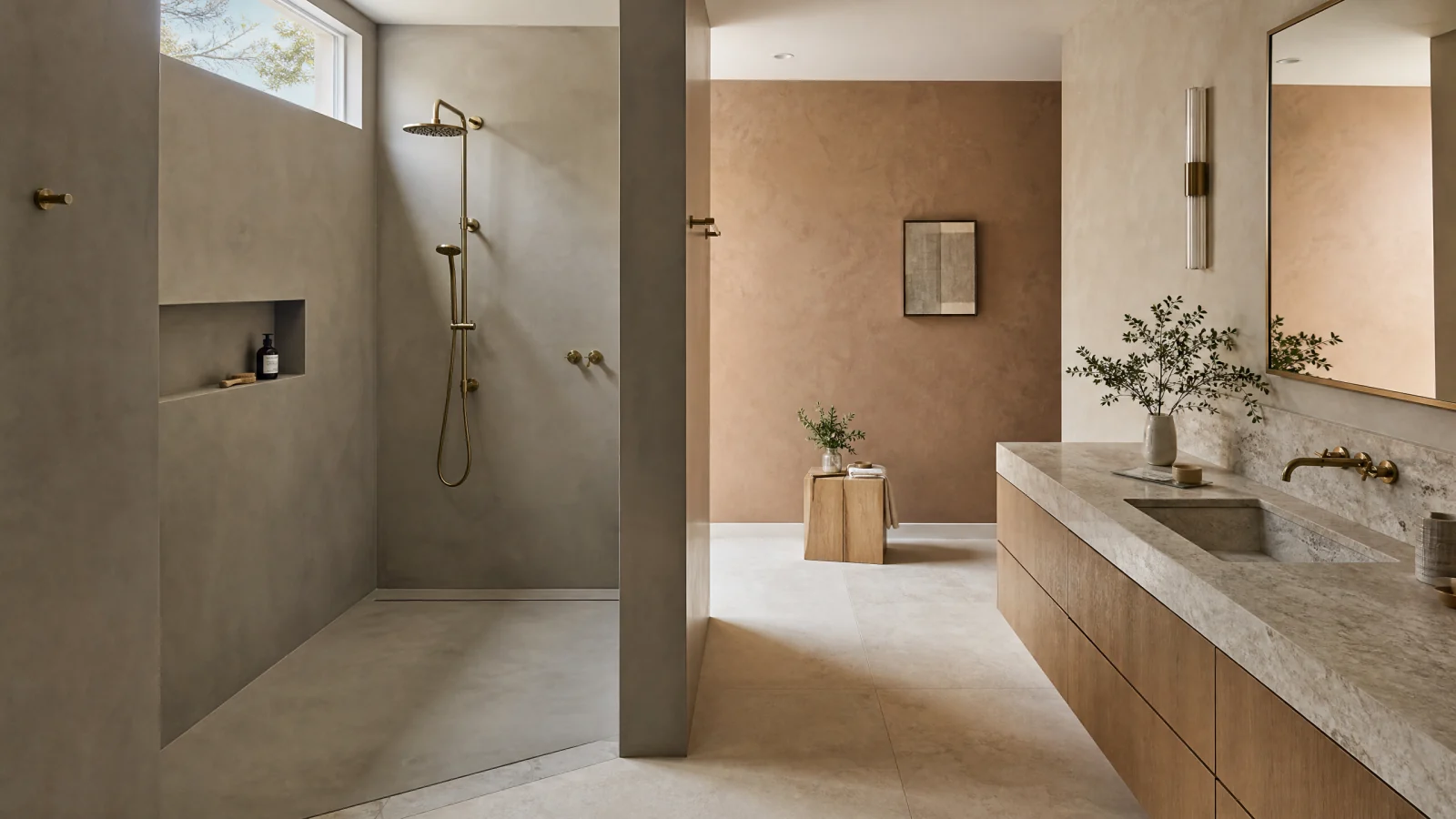
The best luxury bathroom wall finish depends first on exposure zone, not appearance. Inside a shower, the project needs a specified water-management assembly and a finish system approved for direct water. Microcement can provide a seamless surface when the complete membrane, reinforcement, finish, and sealer system is designed for that use. Porcelain tile and natural stone remain strong wet-zone options when installed over an appropriate waterproof assembly. Standard Roman clay and limewash belong in decorative dry zones, not inside showers. Venetian-style lime plaster should enter a direct-wet zone only when a named manufacturer system explicitly approves that assembly.
1. Direct Answer: Choose the System by Exposure Zone
When selecting luxury bathroom wall finishes beyond tile, the most critical factor is the exposure zone. Bathrooms contain distinct micro-environments that demand different performance characteristics from their wall finishes. Understanding these zones ensures that your chosen finish will perform beautifully without failing due to moisture exposure.
The direct-wet zone includes shower interiors, requiring a comprehensive waterproofing assembly. The splash zone surrounds sinks and tubs, experiencing occasional splashes. The humid-but-not-wet zone encompasses the general bathroom space. Finally, the dry decorative zone includes areas like powder rooms where aesthetics take precedence.
Matching the finish to the correct zone is the foundation of a successful luxury bathroom design. A finish that thrives in a dry decorative zone may fail rapidly in a direct-wet shower, regardless of how expertly it is applied.
2. Why the Visible Surface is Not the Waterproofing Plan
A common misconception in bathroom design is that a water-resistant or low-absorption surface finish acts as the primary waterproofing layer. In reality, the visible surface is merely the final layer of a complex water-management system. The true waterproofing occurs beneath the finish, relying on specialized membranes and careful detailing.
According to the Tile Council of North America (TCNA), shower methods require a waterproof membrane over a solid backing. Similarly, MAPEI guidance emphasizes that a shower is a complete system requiring correct waterproofing, addressing corners, drains, and sealants. The appearance of tile or microcement does not replace the concealed water-management assembly.
Furthermore, Building Science Corporation explains that wall assemblies must address water, air, vapor, and thermal control. Decorative finishes cannot correct active moisture, unstable substrates, or failed control layers. Relying solely on the surface finish for waterproofing is a recipe for failure in luxury bathroom wall finishes.
3. Microcement for Seamless Wet Rooms
Microcement has emerged as a premier choice for homeowners seeking seamless bathroom walls and modern wet-room designs. It offers a sleek, continuous surface that eliminates grout lines, providing both a minimalist aesthetic and easier cleaning. However, the success of a microcement shower depends entirely on the correct specification and application of a complete system.
A successful microcement application involves a stable substrate, proper waterproofing, a compatible base coat, finish coats, and a specified sealer. Topciment states that high water resistance depends on correct application and a suitable sealing varnish. Water performance belongs to the complete specified system, not generic unsealed microcement.
When properly installed as part of a comprehensive system, microcement provides a durable, waterproof, and visually stunning alternative to traditional tile in direct-wet zones.
4. Porcelain Tile as a Technical Benchmark
While exploring luxury bathroom wall finishes beyond tile, it is essential to understand why porcelain tile remains a technical benchmark for wet-zone performance. Porcelain is renowned for its density, durability, and exceptionally low water absorption, making it a highly reliable choice for shower interiors.
The ASTM standard C373 is the water-absorption test used in ANSI A137.1 tile classification. Only ceramic tile measuring 0.5% water absorption or less can be deemed porcelain.
However, it is crucial to remember that low tile absorption does not replace the need for a correctly detailed shower membrane and assembly. The grout joints between the tiles remain vulnerable to moisture penetration, and the tile itself cannot bridge structural movement or prevent vapor transmission. Porcelain tile is a high-performance surface, but it must be paired with a rigorous waterproofing system to function effectively in a luxury bathroom environment.
5. Natural Stone: Unmatched Material Character, Material-Specific Care
Natural stone offers unmatched material character, bringing unique veining, texture, and organic beauty to luxury bathroom walls. From classic Carrara marble to dramatic travertine and durable granite, stone provides a timeless aesthetic that elevates any space. However, unlike manufactured porcelain, natural stone requires material-specific care and maintenance.
The Natural Stone Institute provides material-specific cleaning and stain-removal guidance. Natural stone bathroom maintenance depends heavily on the selected stone type, its finish, cleaner compatibility, and any specified sealing regime.
When incorporating natural stone into a direct-wet shower or splash zone, it is vital to select an appropriate stone, ensure it is installed over a correct waterproof assembly, and commit to a stone-specific care plan to preserve its luxury appearance over time.
6. Venetian Plaster, Marmorino, and Documented Shower-Plaster Systems
Venetian plaster and Marmorino offer unparalleled depth, subtle movement, and a tactile richness that transforms flat walls into works of art. These traditional lime-based finishes are highly sought after for luxury bathrooms, but distinguishing between ordinary decorative applications and named, documented shower-plaster systems is critical.
Generic Venetian plaster is not inherently waterproof and should not be used in direct-wet zones without explicit manufacturer approval. Vasari’s Marmorino instructions highlight the requirements for a successful application: clean substrates, suitable primers, and at least two coats.
If you desire a Venetian-style lime plaster inside a shower, it must be a named manufacturer system that explicitly approves that assembly and provides detailed specifications for substrate preparation, waterproofing integration, and final sealing.
7. Roman Clay and Limewash for Powder Rooms and Dry Bathroom Walls
For powder rooms, accent walls, and dry decorative zones within a luxury bathroom, Roman clay and limewash offer beautiful, organic textures that soften the space and add visual interest. These finishes excel in environments where direct water exposure is not a concern.
Roman clay is described by Portola Paints as a plaster-like decorative finish for smooth interior walls. The Havana Roman Clay product guidance explicitly states that Roman Clay is not suitable for wet areas such as shower interiors.
Similarly, limewash is a traditional brush-applied lime finish. Portola’s Terra Lime Wash is positioned for drywall, plaster, stucco, and masonry. It is valued for its breathable appearance but is not approved as a direct-wet shower coating.
8. Where Luxury Bathrooms Fail
Even with premium materials and high-end design, luxury bathrooms can fail prematurely if critical technical details are overlooked during installation. Understanding these common points of failure can help homeowners and builders ensure a lasting, beautiful result.
Failures often begin beneath the surface with incorrect backing materials or omitted membrane transitions. If the waterproofing membrane does not seamlessly connect to the drain or fails to properly bridge changes in plane (like corners or niches), water will inevitably find its way into the wall assembly. Structural movement cracks can telegraph through rigid finishes like tile or unreinforced plaster, compromising the surface and the waterproofing beneath it. Incompatible coatings, such as applying the wrong sealer over a plaster finish, can lead to peeling, discoloration, or a loss of water resistance.
Rushed cure windows are another common culprit. High-performance systems like microcement require specific drying times between layers; rushing this process traps moisture and weakens the final product. Poor slope and drain work prevent water from exiting the shower efficiently, leading to standing water and accelerated wear. Finally, cleaner damage from harsh chemicals and trade-scope gaps—where it is unclear who is responsible for substrate preparation versus final finish—frequently lead to compromised luxury bathroom wall finishes.
9. Maintenance Comparison
Understanding the long-term maintenance requirements of different luxury bathroom wall finishes is essential for making an informed decision. This plain-language comparison highlights the key care expectations for each system.
| Finish System | Grout & Joints | Sealer Dependence | Cleaning Protocol | Patch & Repair Expectations |
|---|---|---|---|---|
| Specified Microcement | Seamless (no grout) | High; relies on specified protective sealer | pH-neutral cleaners only; avoid abrasives | Repairs may be visible; requires skilled touch-up |
| Porcelain Tile | Requires grout maintenance and sealing | Low for tile; moderate for grout lines | Standard non-abrasive bathroom cleaners | Individual tiles can be replaced if spare stock is kept |
| Natural Stone | Requires grout maintenance and sealing | High; requires stone-specific sealing plan | Strictly pH-neutral, stone-safe cleaners | Difficult to match veining; professional restoration needed |
| Shower Plaster / Tadelakt | Seamless (no grout) | High; depends on soap or wax maintenance | Specific mild soaps; avoid harsh chemicals | Requires specialist repair; patches may show variation |
| Roman Clay (Dry Zone) | Seamless | Optional topcoat for wipeability | Gentle dusting or damp wipe (if topcoated) | Touch-ups blend reasonably well with skilled application |
| Limewash (Dry Zone) | Seamless | Typically unsealed for chalky finish | Gentle dusting; not scrubbable | Can be touched up or recoated relatively easily |
Always ensure that your contractor or finish specialist supplies written maintenance instructions specific to the exact products installed in your bathroom.
10. Design Comparison Beyond "Seamless"
While the desire for seamless bathroom walls often drives the selection of finishes like microcement or plaster, the design comparison extends far beyond the absence of grout lines. Each material interacts with light, space, and adjacent surfaces in unique ways.
Visual movement and tactile depth are defining characteristics of hand-applied finishes. Venetian plaster offers a subtle, polished movement that reflects light beautifully, creating a luminous, high-end atmosphere. Roman clay provides a softer, more mottled appearance with a suede-like texture that absorbs light, perfect for creating a cozy, intimate powder room. Limewash delivers a chalky, organic variation that feels deeply historical and grounded.
In contrast, large-format porcelain tiles provide a sleek, monolithic appearance with a precise joint rhythm that can emphasize architectural lines. Natural stone introduces dramatic, organic veining that serves as a focal point. When selecting a finish, consider reflectivity, how the material responds to natural and artificial lighting, and how it transitions to floors, vanities, and adjacent rooms. Always request large physical sample boards to evaluate the finish in your specific lighting conditions before making a final commitment.
11. How to Write a Scope That Protects the Homeowner
A poorly defined scope of work is a leading cause of disputes and failures in luxury bathroom renovations. To protect your investment and ensure a successful outcome, your contract and scope of work must be meticulously detailed.
First, require named products and systems rather than generic terms. Do not accept a proposal for "waterproof plaster" without specifying the exact manufacturer, product line, and approved system assembly. Clearly define substrate responsibility: who is responsible for ensuring the drywall or cement board is plumb, flat, and prepared to the required level? Specify membrane compatibility, ensuring the chosen finish is explicitly approved for use over the installed waterproofing membrane.
The scope must include edge and drain details, outlining exactly how the finish will transition to fixtures, glass enclosures, and the floor. Mandate a physical mockup for approval before the final installation begins. Detail the required cure timing between coats and before the space can be used. Specify the exact sealer to be used and demand a written cleaning protocol upon completion. Finally, clearly outline exclusions (what the finish contractor is not doing) and repair responsibility if the finish fails or is damaged by other trades.
12. Dallas Consultation Path
Choosing the right luxury bathroom wall finish requires careful consideration of exposure zones, maintenance expectations, and aesthetic goals. Whether you are designing a seamless microcement wet room, a luminous Venetian plaster vanity wall, or a textured Roman clay powder room, expert guidance is essential to ensure long-term performance.
At Accent Wall of Art, we specialize in premium wall finishes for discerning homeowners, designers, and builders. We proudly serve Dallas, Plano, and Frisco, providing expert installation of microcement showers, Venetian plaster, Roman clay, and limewash. For more insights on selecting the right professional for your project, read our guide on choosing a plaster finish specialist or explore our comprehensive microcement shower Dallas guide on our blog.
Ready to discuss your luxury bathroom renovation? Contact us today to request an estimate or call (469) 608-0780 to speak with our team about your specific project requirements.
Frequently Asked Questions
Is microcement completely waterproof?
Microcement itself is highly water-resistant, but true waterproof performance depends entirely on the correct application of the complete system, including the underlying waterproof membrane and the specified protective sealing varnish.
Do I still need a waterproof membrane behind porcelain tile?
Yes. While porcelain tile has exceptionally low water absorption, the grout joints and transitions are vulnerable to moisture. A complete waterproof membrane assembly is required behind the tile to protect the wall structure.
Can I use Roman clay inside a shower?
No. Roman clay is a decorative finish designed for dry interior walls. It is not suitable for direct-wet areas like shower interiors, even with a protective topcoat, as it is not a waterproof system.
Is limewash a good choice for a bathroom vanity wall?
Limewash can be used on a dry bathroom wall, but it has a chalky finish that is not highly scrubbable. If used near a vanity, it should be kept out of the direct splash zone to avoid water spots and staining.
Does all natural stone require the same maintenance in a bathroom?
No. Natural stone maintenance is highly material-specific. Different stones have varying levels of porosity and sensitivity to acids, requiring specific cleaning products and customized sealing schedules to prevent damage and staining.
What should I ask a shower-finish specialist before hiring them?
Ask for the specific named product system they intend to use, their requirements for substrate preparation and waterproofing compatibility, and a written maintenance protocol. Always request a physical mockup before work begins.
References
- Tile Council of North America: Showers FAQ
- MAPEI: Shower Waterproofing and Installation
- Topciment: Microcement and Humidity
- ASTM: Standards and the Ceramic Tile Industry
- Natural Stone Institute: Stone Care
- Vasari Marmorino Plaster Instructions
- Portola Paints: Havana Roman Clay
- Portola Paints: Terra Lime Wash
- Building Science Corporation: Understanding Walls
Related Questions & Answers
Is microcement completely waterproof?
Microcement itself is highly water-resistant, but true waterproof performance depends entirely on the correct application of the complete system, including the underlying waterproof membrane and the specified protective sealing varnish.
Do I still need a waterproof membrane behind porcelain tile?
Yes. While porcelain tile has exceptionally low water absorption, the grout joints and transitions are vulnerable to moisture. A complete waterproof membrane assembly is required behind the tile to protect the wall structure.
Can I use Roman clay inside a shower?
No. Roman clay is a decorative finish designed for dry interior walls. It is not suitable for direct-wet areas like shower interiors, even with a protective topcoat, as it is not a waterproof system.
Is limewash a good choice for a bathroom vanity wall?
Limewash can be used on a dry bathroom wall, but it has a chalky finish that is not highly scrubbable. If used near a vanity, it should be kept out of the direct splash zone to avoid water spots and staining.
Does all natural stone require the same maintenance in a bathroom?
No. Natural stone maintenance is highly material-specific. Different stones have varying levels of porosity and sensitivity to acids, requiring specific cleaning products and customized sealing schedules to prevent damage and staining.
Discuss Your Custom Surface Project
Every project starts with a brief onboarding call with our principal design team. We discuss color matches, light reflections, and deliver custom sample boards directly to your Dallas-area home.
Ready to Transform Your Surfaces?
We bring ancient Italian artistry and cutting-edge continuous surfaces directly to Dallas' most prestigious homes. Whether you need Venetian plaster, seamless microcement floors, or exterior smooth stucco, our team delivers perfection.
Inquire Online
Submit your details and project scope. Our design lead will review your requirements.
Mandatory Onboarding Call
All signed clients are required to schedule a brief call with our principal design lead to finalize sample boards, color palettes, and lighting conditions.
Artisan Execution
Our team of master plasterers hand-crafts your finishes to perfection.
Plaster & Microcement Care Studio
Learn how to clean stains, wax dry plasters, and protect microcement wetrooms with our interactive care guidelines.
Request a Free Custom Estimate
Fill out the form below. We will get back to you within 24 business hours.