
How to Choose a Plaster Finish Specialist in Dallas
"Practical guidance for homeowners and designers on hiring a plaster finish specialist: insist on mockups, substrate prep, written scope, proof of insurance, and realistic timelines."
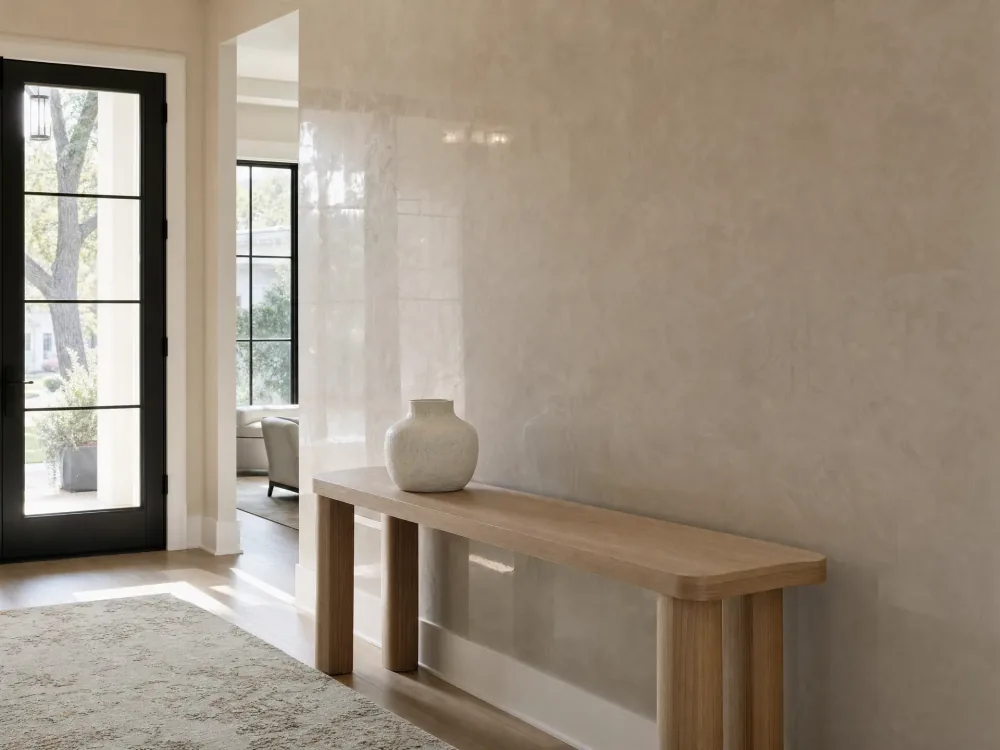
How to choose a plaster finish specialist in Dallas — short answer
Pick a specialist who understands your surface, shows real samples or mockups, explains substrate preparation and moisture management, provides a written scope with pricing ranges, and has clear insurance and references. Those five things predict a successful Venetian or decorative plaster project more than a polished website or a low bid.
Why those five things matter first
Plaster finishes—Venetian, Marmorino, microcement, Tonachino, limewash—are applied over existing walls, and the final look and longevity depend as much on preparation and installation as on the finish coat. A talented finisher who skips substrate repair or minimizes testing can deliver a beautiful surface that fails fast. Conversely, a contractor who focuses on preparation, mockups, and clear scope will give you predictable results and fewer surprises.
Concrete steps to evaluate specialists
-
Ask for a project-specific mockup or sample.
Request a 12"–24" sample on your actual wall or an identical substrate. Samples show color, texture, sheen, and how the finish reacts to existing paint or drywall. Insist the sample uses the same substrate and junction details (corners, windows, trims) as the project.
-
Run a substrate and moisture walkthrough.
A good specialist will inspect for loose paint, gypsum dust, efflorescence, hairline cracks, prior water stains, and vapor drive. They should explain what needs minor textured-wall preparation (~$2/sq ft) versus major stabilization (~$5/sq ft) and how that affects schedule and cost.
-
Compare sample finishes side-by-side.
Ask for at least two technique samples (e.g., Venetian versus polished Marmorino). Compare in the room’s lighting at different times of day. Pay attention to application direction, polishing level, and imperfections—some textures look better with subtle irregularity.
-
Get a written scope, timeline, and payment schedule.
The scope should list surface preparation tasks, prime/seal layers, number of finish coats, topcoat (if any), cleaning and protection of adjacent surfaces, and estimated working hours. Payment should be staged: deposit, progress, final—avoid large final balances withheld without clear acceptance criteria.
-
Request proof of insurance and references.
Ask for general liability insurance and worker coverage; request recent local references and photos of completed projects similar in size and finish. Call the references and ask about communication, schedule adherence, and how punch-list items were handled.
What to expect during preparation and installation
Preparation is often 30–60% of the work. Typical tasks include cleaning, patching nail pops, stabilizing loose plaster or drywall, installing movement joints where needed, and priming. In Dallas’s climate you may also need to account for interior humidity control during application and curing—ask the specialist how they manage drying times and whether they’ll schedule work during seasons with stable indoor conditions.
During installation expect multiple stages: base leveling, successive finish coats, burnishing or polishing for Venetian/Marmorino, and final sealer or protective topcoat for high-use areas. Ask how the team protects floors and trim, and whether they use drop cloths, adhesive film, or temporary barriers.
Comparing common decorative plaster finishes (practical table)
| Finish | Typical planning range (per sq ft) | Look & feel | Typical uses | Maintenance |
|---|---|---|---|---|
| Venetian plaster | $27–$43 | Smooth, polished, depth/soft sheen | Feature walls, entry halls, dining rooms | Wipeable; occasional re-polish if high-traffic |
| Marmorino (matte) | $22–$34 | Stone-like, subtle texture, soft matte | Bathrooms (with proper sealing), living rooms | Low maintenance; sealed in wet areas |
| Waterproof microcement | $30–$49 | Continuous, modern concrete-look | Bathrooms, showers, floors, countertops | Requires correct sealing; groutless surfaces easier to clean |
| Tonachino (sand plaster) | $20–$32 | Textured, earthy, tactile | Accent walls, restaurants, rustic interiors | Dusting and gentle cleaning; avoid abrasive scrubbers |
| Limewash | $10–$17 | Soft, breathable, chalky matte finish | Historic restorations, feature walls | May mellow with time; touch-ups visible unless re-applied broadly |
Questions to ask every candidate (use this checklist)
- Can you show samples or a mockup on my substrate?
- How will you prepare my walls and what are the estimated costs for preparation? (Minor prep ≈ $2/sq ft; major stabilization ≈ $5/sq ft.)
- What exactly is included in your written scope and final clean-up?
- Which finish are you proposing and why is it right for this room?
- How many coats, what materials, and what curing time between coats?
- Do you carry general liability insurance and worker coverage? Can you provide certificates?
- Can you provide references for projects completed in the last 12–24 months?
- How do you handle change orders and unforeseen substrate issues?
- What maintenance will the homeowner be expected to perform?
Evaluating proposals and pricing
Prices vary with complexity, access, surface irregularity, and materials. Use the approved planning ranges in the table as a sanity check—these are planning ranges, not bids. If a bid is substantially lower, ask which preparation steps are being omitted or deferred. If it’s substantially higher, ask for line-item explanations (higher-grade material, extra polishing, custom pigments, scaffolding costs, or complex masking).
Request a clear line-item estimate: square footage, preparation line items, materials by name (not just “plaster”), number of coats, sealer/topcoat, protection/cleanup, and contingency for hidden issues. This makes comparing bids straightforward and reduces surprises.
How long will it take?
Small accent walls can be completed in a few days including preparation and curing. Larger rooms, bathrooms, or projects requiring major stabilization or multiple finish layers may take one to three weeks. Timing depends on substrate repairs, sample approvals, number of finish passes, drying conditions, access, and whether several rooms must remain usable during the work.
- Extent of substrate repair needed
- Number of finish coats and drying times
- Whether protective topcoats are required
- Access and rhythm of trades on site
Ask each contractor for a realistic timeline tied to specific milestones (prep complete, finish coats applied, final inspection). Avoid accepting vague timelines like “a few days” without details.
Hiring: contract essentials and red flags
Include these items in the contract:
- Detailed scope with materials and preparation steps
- Start and completion dates with milestone payments
- Sample approval clause—work proceeds only after you sign off on a mockup
- Insurance certificate and safety plans for larger jobs
- Punch-list and final acceptance criteria
- Warranty or maintenance guidance (even a simple written care sheet)
Red flags:
- No onsite sample or refusal to mock up on your wall
- Reluctance to provide references or insurance proof
- Vague scope or “trust me” pricing without line items
- High upfront cash requests without a clear schedule
Site coordination and other trades
Plaster finishes are often scheduled after drywall, carpentry, and trim but before final mechanical balancing and some finish carpentry. Coordinate with your general contractor about sequencing: HVAC should be set to stable conditions, electrical/plumbing penetrations should be completed, and adjoining trades should avoid work that will damage fresh finishes. Ask the plaster specialist whether they will protect adjacent surfaces and whether they prefer other trades to wait until after their final sealer is applied.
Common homeowner concerns—and practical answers
Will plaster chip or peel?
Proper adhesion starts with correct preparation and priming. Chips are more likely where surfaces weren’t stabilized or where doors and furniture make direct impact. Discuss high-traffic conditions with your specialist and consider extra protection or higher abrasion-resistant topcoats in those areas.
Can I paint over plaster later?
Yes, but the appearance will change. Painting over a polished Venetian or Marmorino removes the subtle depth those finishes create. If future paint is likely, discuss reversible options or transitional systems that allow easier repainting.
Is lime-based plaster OK in a Dallas home?
Lime-based finishes are breathable and used successfully in many interiors. They may age differently than modern acrylic systems. Ask your specialist about appropriate sealing in rooms with splash or continuous moisture exposure.
Resources and next steps
If you’re narrowing candidates, ask for written mockup approvals and a short, itemized proposal. For more detailed service descriptions, read our decorative plaster services page at Decorative Plaster Services in Dallas. If you’re planning a project inside the city, check local considerations via our Dallas page at Dallas location information. Architects and specifiers will find practical guidance in our technical post Architect’s Guide to Specifying Venetian Plaster. For a broader set of articles, visit our blog.
FAQ
How much should I budget for a feature wall?
Plan using the ranges in the table above. For a single accent wall, multiply the finished square footage by the per-square-foot planning range for the chosen finish and add expected preparation costs (minor $2/sq ft; major stabilization $5/sq ft) if applicable. These are planning figures, not quotes.
Do finishes work in bathrooms and wet areas?
Certain plasters can be used in bathrooms when properly detailed and sealed (waterproof microcement is engineered for wet zones). Always confirm with the specialist which product and sealer system they recommend for continuous wet exposure.
What maintenance will I need to do?
Maintenance varies: sealed Venetian and microcement surfaces are generally wipeable; limewash and some textured plasters may require gentler care. Ask for a written care sheet with product-specific cleaning instructions before final payment.
Should I hire a local Dallas specialist?
There is value to local experience: they understand regional climate, supplier networks, and local building practices. If you’re in Dallas, look for a specialist with local references and recent projects nearby.
Closing advice
Start with a clear sample, an honest discussion about preparation, and a written scope. That sequence—sample, prep plan, clear contract—reduces risk and ensures the finished surface matches your expectation. Don’t choose solely on price: cheap shortcuts in preparation create future costs.
Accent Wall of Art is available to answer questions about materials, mockups, and scheduling for Dallas projects. For consultations or to request a scope and sample, call (469) 608-0780 or contact us.
Related Questions & Answers
How much should I budget for a feature wall?
Plan using the ranges in the table above. For a single accent wall, multiply the finished square footage by the per-square-foot planning range for the chosen finish and add expected preparation costs (minor $2/sq ft; major stabilization $5/sq ft) if applicable. These are planning figures, not quotes.
Do finishes work in bathrooms and wet areas?
Certain plasters can be used in bathrooms when properly detailed and sealed (waterproof microcement is engineered for wet zones). Always confirm with the specialist which product and sealer system they recommend for continuous wet exposure.
What maintenance will I need to do?
Maintenance varies: sealed Venetian and microcement surfaces are generally wipeable; limewash and some textured plasters may require gentler care. Ask for a written care sheet with product-specific cleaning instructions before final payment.
Should I hire a local Dallas specialist?
There is value to local experience: they understand regional climate, supplier networks, and local building practices. If you’re in Dallas, look for a specialist with local references and recent projects nearby.
Discuss Your Custom Surface Project
Every project starts with a brief onboarding call with our principal design team. We discuss color matches, light reflections, and deliver custom sample boards directly to your Dallas-area home.
Ready to Transform Your Surfaces?
We bring ancient Italian artistry and cutting-edge continuous surfaces directly to Dallas' most prestigious homes. Whether you need Venetian plaster, seamless microcement floors, or exterior smooth stucco, our team delivers perfection.
Inquire Online
Submit your details and project scope. Our design lead will review your requirements.
Mandatory Onboarding Call
All signed clients are required to schedule a brief call with our principal design lead to finalize sample boards, color palettes, and lighting conditions.
Artisan Execution
Our team of master plasterers hand-crafts your finishes to perfection.
Plaster & Microcement Care Studio
Learn how to clean stains, wax dry plasters, and protect microcement wetrooms with our interactive care guidelines.
Request a Free Custom Estimate
Fill out the form below. We will get back to you within 24 business hours.