
Limewash Exterior Stucco: Breathable Weather Protection
"Limewash can be a breathable, low-build finish for exterior stucco — but only if the wall assembly (flashings, WRB, drainage, penetrations) is sound. Learn assessment steps, tradeoffs, preparation, and hiring questions."
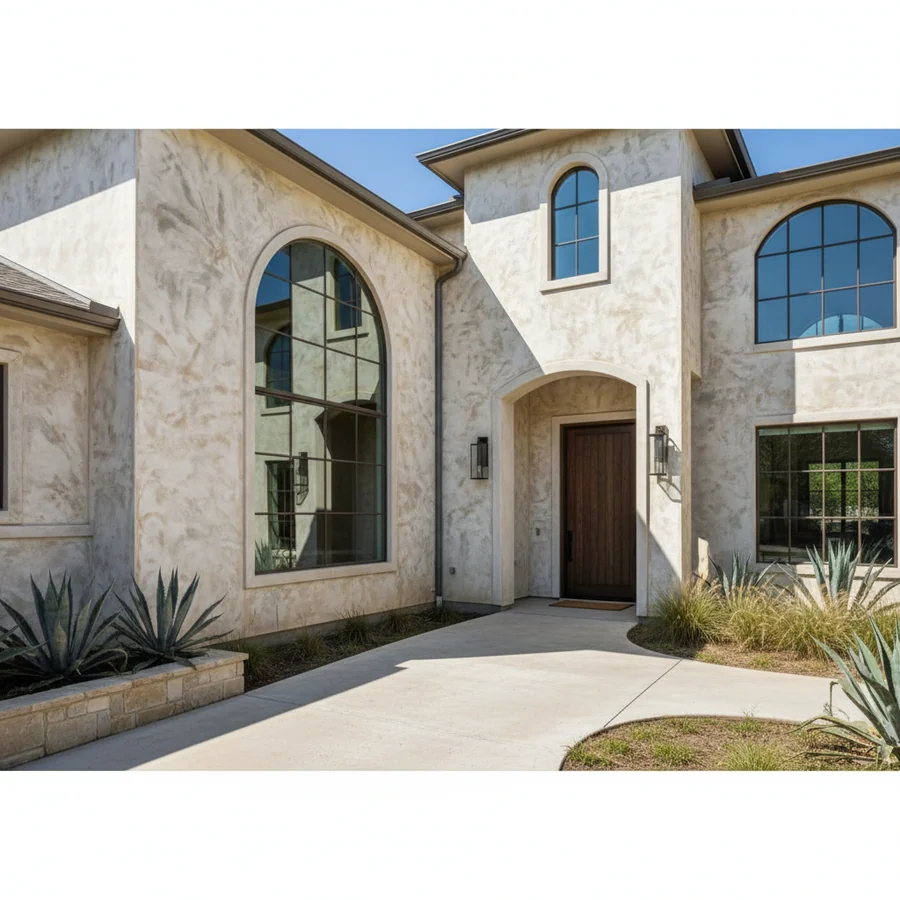
Limewash Exterior Stucco: Breathable Weather Protection
Short answer: Limewash can be an excellent breathable, low-build finish for exterior stucco, but it only protects when the underlying wall assembly — drainage plane, flashing, penetrations, and substrate — is sound. An on-site assessment is essential to determine whether limewash can be applied as a resurfacing finish or whether repairs to the stucco and water-management components are required first.
Why homeowners, designers, and builders consider limewash for stucco
Limewash is a thin, breathable finish that soaks into mineral substrates rather than forming a film. For owners and designers seeking a muted, aged matte look, improved vapor permeability, and a finish that patinates over time, limewash is attractive. It’s thinner and lighter in appearance than cement-based topcoats and, when applied properly, supports drying of the wall assembly rather than trapping moisture behind a non‑breathable paint.
Make the decision in two steps: assess the wall assembly, then choose finish scope
Before planning an exterior limewash job, separate the evaluation into two linked decisions:
- Can the existing stucco and water-control details remain? That requires an on-site assessment for cracking, delamination, flashings, window/door penetrations, roof-to-wall interfaces, and the presence of an effective water-resistive barrier and drainage path.
- If so, what limewash scope and preparation will achieve the desired look and durability? This includes substrate cleaning, minor or major stabilization, texture matching, primer or consolidant choices, and the number of limewash coats.
What an on-site assessment looks for (and why it matters)
A competent assessment inspects the whole wall system, not just the surface finish. Relevant checks include:
- Drainage plane and WRB continuity: Stucco is a cladding that should work with a water-resistive barrier and drainage/vented space where required. If those layers are compromised, a decorative finish like limewash will not stop water intrusion. Refer to industry guidance for stucco and drainage plane expectations when evaluating assemblies.
- Flashings and transitions: Roof-to-wall, window/door head flashings, trim terminations, and kickout flashings must be present and properly integrated. Poorly flashed transitions are a common source of moisture behind stucco.
- Penetrations and sealants: Vents, pipes, light fixtures, and other penetrations should be checked for proper flashing and sealant condition. Limewash won’t substitute for failed penetration detailing.
- Cracks and active movement: Hairline or localized cracks can often be prepared and covered; however, large or actively moving cracks indicate underlying movement or attachment problems. Limewash is a low-build coating and cannot stop active movement nor repair failed drainage.
- Delamination and loose stucco: Areas of detachment or hollow-sounding stucco require stabilization or removal and re-application of proper base coats before any finish is applied.
These points are consistent with the Stucco Manufacturers Association and building-enclosure best practices: exterior stucco projects must address moisture management, flashing, and transitions rather than rely on a finish coat to fix assembly failures.
Practical scope and preparation options
Once the assembly is judged capable of receiving a limewash finish, decide the level of preparation. Practical options include:
- Light cosmetic resurfacing (planning): Power wash, remove loose material, spot-patch hairline cracks, and apply limewash. Suitable when stucco is well‑attached and details are sound.
- Minor stabilization (planning): About $2/sq ft as a planning range for localized patching, re-anchoring small loose patches, and consolidating the surface before limewash. This is for when some areas need modest repair but the system is otherwise intact.
- Major stabilization (planning): About $5/sq ft as a planning range for situations requiring larger replacement patches, mesh reinforcement, or re-profiling of substrate textures prior to finish. This does not include full re-cladding or extensive drainage-plane repair.
Note: These preparation cost ranges are planning values for budgeting and are not formal quotes. The actual scope often varies by inspection and materials.
Technical tradeoffs: breathability versus film protection
Limewash is breathable and allows water vapor to pass through, which helps substrates like traditional cement stucco or lime-based renders to dry. That breathability is an advantage on assemblies that are already managing liquid water properly. The tradeoffs to understand:
- Water shedding: Limewash is not a heavy film-forming membrane. It helps protect against surface soiling and some rain impact, but it is not a substitute for flashing, WRBs, or paint membranes designed to shed bulk water.
- Durability: Limewash typically requires reapplication over time; it weathers differently than acrylic paints. Expect patina, occasional touch-ups, and a more natural erosion of the surface rather than permanent film retention.
- Appearance and texture: Limewash emphasizes texture and substrate color variations; achieving a uniform finish may require multiple coats and careful sample testing.
Color, texture, and mockups — make them practical
Because limewash soaks into the substrate, color appears softer and changes as coats weather in. To avoid surprises, follow these steps:
- Ask for a small mockup on representative wall areas (north- and south-facing exposures) and at least two color samples. Weather and sun angle affect appearance.
- Mockups should include the final number of coats and the final topcoat application method (brush, brush-and-wash, or spray then brush-back). For limewash, brush application often yields the traditional look.
- Document the mockup location and approve it in writing before proceeding. This protects both client and installer from subjective color disagreements later.
Hiring: what to ask your contractor
When interviewing contractors for limewash over exterior stucco, ask for specifics focused on assessment and enclosure integrity:
- Do you perform an on-site wall-assembly assessment that checks flashings, WRB continuity, and penetrations? (A surface-only quote is a red flag for exterior work.)
- Can you show how you will prepare areas with hairline cracks versus areas needing major stabilization? Ask for examples of proposed repair methods and when full substrate removal would be recommended.
- How will you protect and detail windows, doors, and metal flashings during application to avoid staining or trapped moisture?
- What mockup sizes and locations do you propose for color and texture approval? Will the mockup include the exact application method?
- How do you handle unforeseen findings discovered during preparation (e.g., delamination, missing flashing)? Ask how change orders are documented and estimated.
Practical timeline and typical stages
A realistic limewash stucco project proceeds in stages rather than all at once. Typical stages:
- Initial assessment and written scope that separates cosmetic resurfacing from required enclosure repairs.
- Mockup application and client approval.
- Surface preparation: cleaning, localized patching, stabilization, and protection of adjacent materials.
- Application of limewash coats with appropriate drying time between coats (weather dependent).
- Final inspection with client walk-through and minor touch-ups if needed.
Seasonal timing matters: avoid high winds, freeze/thaw conditions, or heavy rains during application and curing. In Dallas, coordinate timing to avoid summer heat extremes and storms.
Cost planning and budgeting
Use planning ranges for budgeting rather than exact quotes. For exterior limewash over existing stucco, budget items include preparatory work and the limewash application itself. Include contingency for stabilization if the assessment reveals localized delamination, missing flashings, or extensive cracking.
| Item | Planning range / notes |
|---|---|
| Limewash materials & application | Project-specific; depends on coats and crew. Limewash is generally lower material cost but higher labor for multiple thin coats and brushing. |
| Minor textured-wall preparation | About $2/sq ft (planning range) for localized patching and consolidation. |
| Major stabilization | About $5/sq ft (planning range) for larger patchwork or re-profiling before finish. |
| Mockups | Often charged as a small line item; essential for color/texture approval. |
| Contingency | Plan for 5–15% contingency for uncovered repairs to drainage, flashings, or penetrations. |
Limitations and what limewash will not do
Be explicit about what limewash cannot solve:
- It will not repair a failed drainage plane or missing/poorly installed flashing. Those items must be corrected first.
- Limewash does not stop active structural movement or guarantee a crack-free finish in the future.
- It is not a heavy membrane for shedding bulk water — good water management behind the stucco is required.
Maintenance and expected lifecycle
Limewash is low-maintenance but not maintenance-free. Expect natural weathering and occasional touch-ups or re-coating every several years depending on exposure and climate. Keep joints and sealants in good condition, monitor flashings and penetrations, and schedule periodic inspections so the finish remains an asset rather than masking enclosure problems.
Local considerations for Dallas projects
In Dallas, consider solar exposure, summer storms, and occasional freeze events. Properly flash eaves, roof-to-wall transitions, and window heads to handle heavy rains. For projects in Dallas neighborhoods where historic appearance matters, limewash can deliver an appropriate aesthetic when combined with careful detailing and mockups. If you want examples of limewash on residential properties, see our related pages on limewash walls and local project notes.
FAQ
Will limewash stop water from getting into my stucco?
No. Limewash is a breathable surface finish and helps the wall dry, but it does not replace flashing, drainage planes, or a functioning water-resistive barrier. If water is getting behind the stucco, those enclosure issues must be corrected before finishing.
How do I know if my stucco is sound enough for limewash?
Schedule an on-site assessment that checks flashings, WRB/drainage-path continuity, penetrations, and for areas of delamination or active movement. A professional assessment identifies whether the existing shell can remain or requires stabilization.
Can you apply limewash over acrylic paint or non-breathable coatings?
Limewash performs best on mineral or lime-friendly substrates. Non-breathable acrylic coatings generally must be removed or properly prepared to restore substrate porosity; otherwise, the limewash may not adhere or will behave differently.
How many coats of limewash are typical?
Two to three thin coats are common, applied after appropriate cleaning and preparation. Exact coats depend on the look desired and substrate absorption; mockups are the best way to determine final appearance.
Do you recommend maintenance plans after limewash application?
Yes. Periodic inspections of flashings, sealants, and any penetration details are recommended. Expect touch-ups over time as the finish weathers.
References
Consult the following authoritative resources when planning work on exterior stucco assemblies:
- AWCI — Stucco and Drainage Planes
- Stucco Manufacturers Association — Technical Bulletins
- Building Science Corporation — BSI-120: Understanding Walls
Related resources and next steps
If you’re evaluating limewash as a finish option, review our limewash wall service information and a nearby project case study to understand appearance and process: Limewash Walls — Service Details and Limewash Walls — Preston Hollow. For broader context on finishes and projects, see our blog index and local location information: Accent Wall of Art Blog and Dallas Service Area.
If you’re ready for an on-site assessment and a clear scope that separates cosmetic limewash from necessary enclosure repairs, request a consultation through our contact page or call (469) 608-0780. Request a consultation.
Related Questions & Answers
Will limewash stop water from getting into my stucco?
No. Limewash is a breathable surface finish and helps the wall dry, but it does not replace flashing, drainage planes, or a functioning water-resistive barrier. If water is getting behind the stucco, those enclosure issues must be corrected before finishing.
How do I know if my stucco is sound enough for limewash?
Schedule an on-site assessment that checks flashings, WRB/drainage-path continuity, penetrations, and for areas of delamination or active movement. A professional assessment identifies whether the existing shell can remain or requires stabilization.
Can you apply limewash over acrylic paint or non-breathable coatings?
Limewash performs best on mineral or lime-friendly substrates. Non-breathable acrylic coatings generally must be removed or properly prepared to restore substrate porosity; otherwise, the limewash may not adhere or will behave differently.
How many coats of limewash are typical?
Two to three thin coats are common, applied after appropriate cleaning and preparation. Exact coats depend on the look desired and substrate absorption; mockups are the best way to determine final appearance.
Do you recommend maintenance plans after limewash application?
Yes. Periodic inspections of flashings, sealants, and any penetration details are recommended. Expect touch-ups over time as the finish weathers.
Discuss Your Custom Surface Project
Every project starts with a brief onboarding call with our principal design team. We discuss color matches, light reflections, and deliver custom sample boards directly to your Dallas-area home.
Ready to Transform Your Surfaces?
We bring ancient Italian artistry and cutting-edge continuous surfaces directly to Dallas' most prestigious homes. Whether you need Venetian plaster, seamless microcement floors, or exterior smooth stucco, our team delivers perfection.
Inquire Online
Submit your details and project scope. Our design lead will review your requirements.
Mandatory Onboarding Call
All signed clients are required to schedule a brief call with our principal design lead to finalize sample boards, color palettes, and lighting conditions.
Artisan Execution
Our team of master plasterers hand-crafts your finishes to perfection.
Plaster & Microcement Care Studio
Learn how to clean stains, wax dry plasters, and protect microcement wetrooms with our interactive care guidelines.
Request a Free Custom Estimate
Fill out the form below. We will get back to you within 24 business hours.